Mechanism Illustration
Receptor-mediated endocytosis
Ligand binding, membrane invagination and vesicle formation unfold along one membrane. Spatial divisions and directional arrows connect extracellular cargo with an intracellular vesicle.
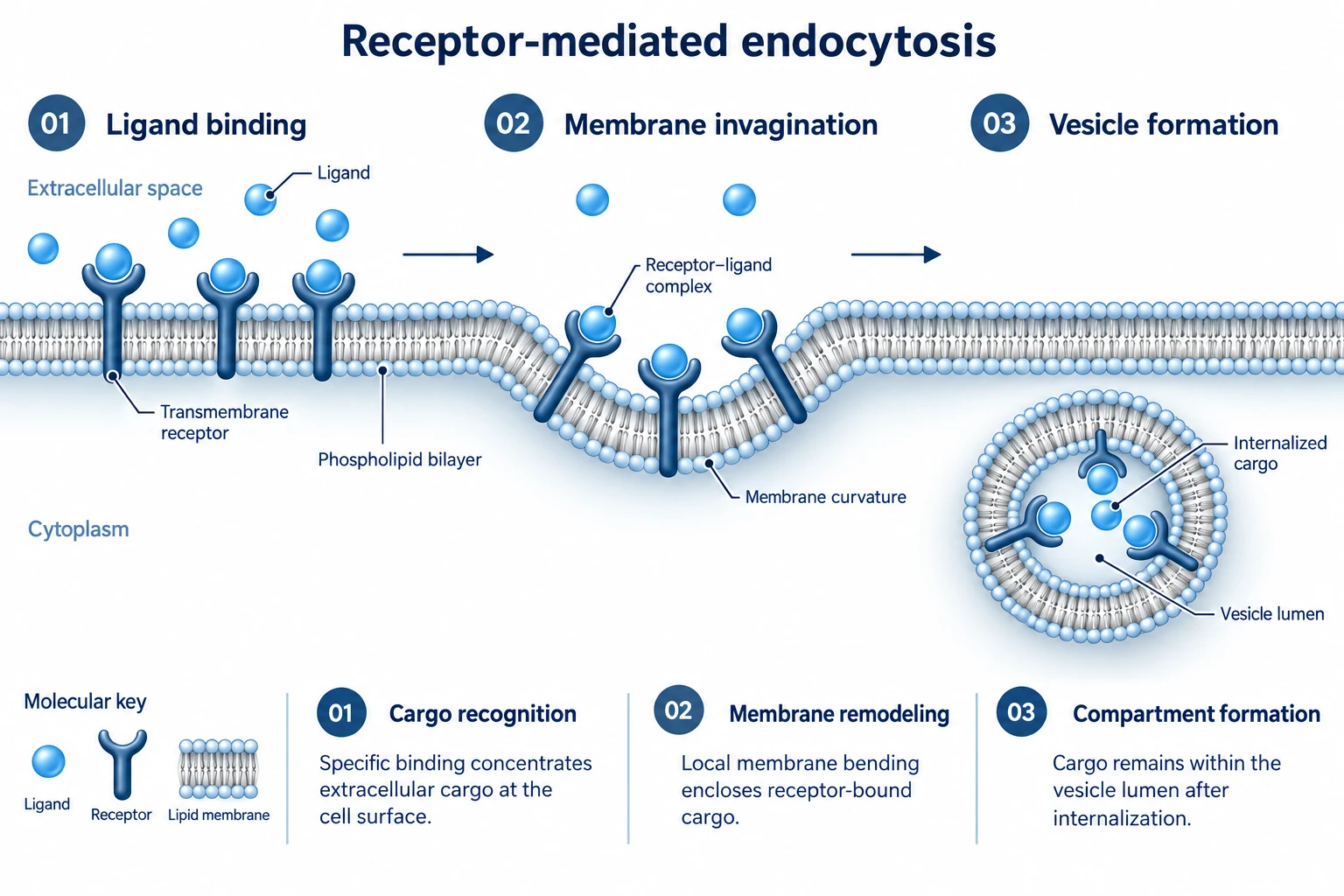
Follow three steps along the membrane
The figure arranges ligand binding, membrane invagination and vesicle formation from left to right. Extracellular space sits above the membrane and the cytoplasm below it. Round ligands and differently shaped transmembrane receptors distinguish the transported material from the structures that recognize it.
Separate process arrows from label leaders
Horizontal arrows guide the sequence. Thin leaders identify the ligand, receptor, phospholipid bilayer, membrane curvature and vesicle lumen. Cargo shown inside the vesicle occupies its lumen; internalization into the cell should not be confused with release into the cytoplasm. The key below the drawing helps readers identify recurring objects without repeating every label.
Prepare the mechanism and its evidence
Provide the process to explain, names of the objects, relationships between structures or molecules, and supporting references. If a particular receptor, transport pathway or later destination matters, supply its identity and evidence. Specify which steps should be omitted rather than filling gaps with an assumed molecular mechanism.
Check labels and scientific meaning
The research team should confirm steps, spatial positions and relationships before reviewing abbreviations, leader endpoints and consistency with the key. Use distinguishable symbols for progression, activation, inhibition and enlargement. Check text at the intended display size, and retain references, revision notes and the approved version alongside the final figure.